Why AI-generated UI isn't shippable, and what works
I recently used AI to generate UI and walked into a hole.
Google Stitch’s screens really are pretty. Then I asked it for a second page, and a third:
Every page had different button sizes, different spacing, different colors.
If you are a developer, you know what that means:
- components cannot be reused
- every page needs its own CSS
- maintenance explodes
- the redundancy makes you want to swear
AI-generated UI is beautiful and inconsistent. That is the house disease of AI design tools.
Why is it inconsistent?
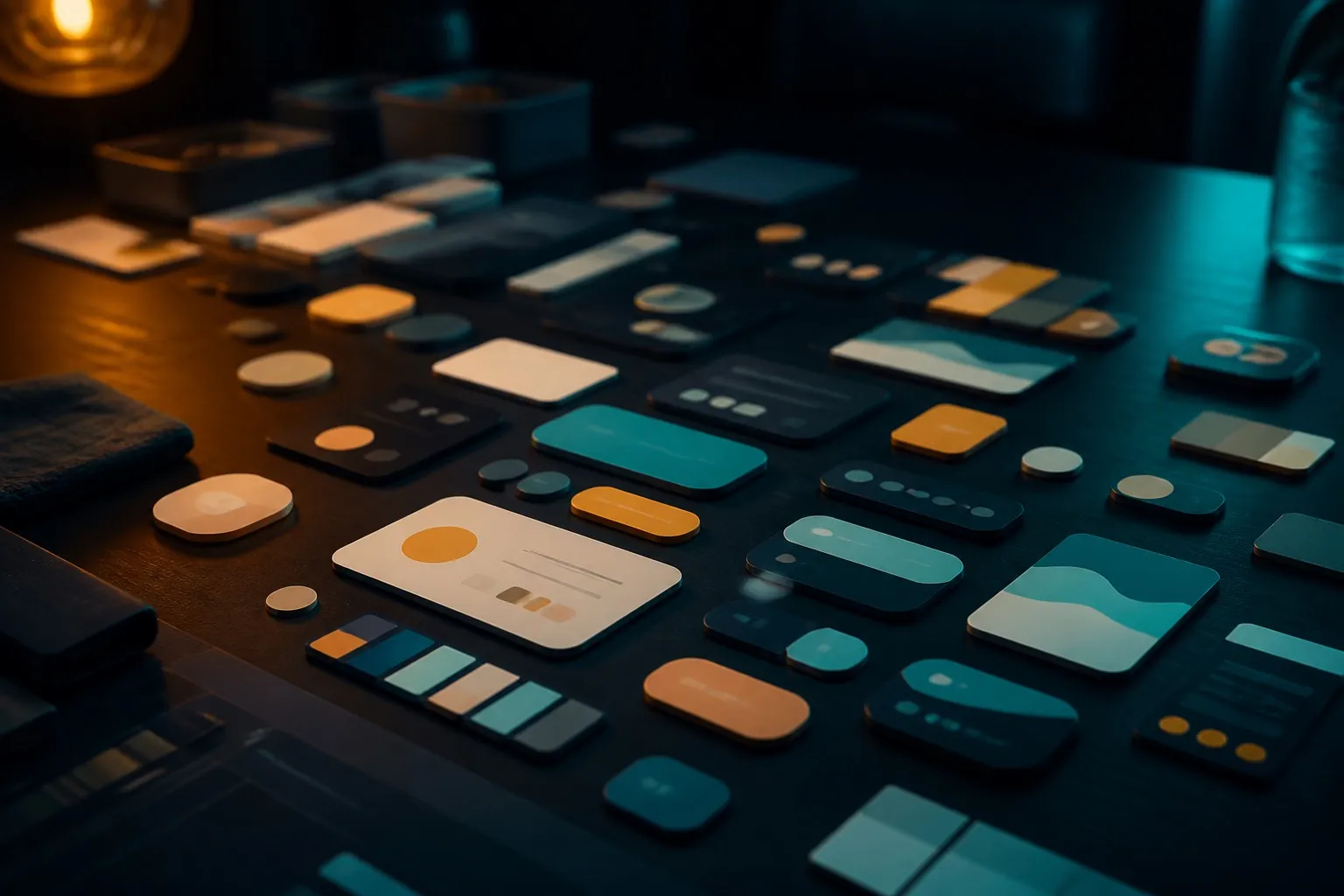
Each generation is an independent act of creation. The model does not remember the last page’s color, does not know how tall a button should be, does not know the spacing spec.
It is like asking ten designers to each design one page. Everyone has taste. Glued together it is a disaster.
AI is good at inventing. It is bad at obeying a system.
The fix: Pencil + Stitch
I landed on a two-step combo.
Step 1: let Pencil set the rules
Pencil is an AI prototyping tool. Its strength is not “pretty.” It is discipline.
You can tell it:
- primary color is
#3B82F6 - buttons are 40px tall
- card gap is 16px
- titles are 24px
Then have it generate a series of pages against that spec.
Result: every page lines up, like a formation.
Cost: not pretty enough. Little visual pull.
Step 2: let Stitch dress it
The workflow:
- Generate a disciplined prototype in Pencil (black-and-white is fine)
- Export images
- Import into Google Stitch
- Ask Stitch to beautify from those prototypes
The point: Stitch is not inventing from zero. It is optimizing a skeleton you already set.
It cannot wander, because the frame is fixed. It only adds visual detail:
- better color
- finer shadows
- more modern icons
- more comfortable gradients
Result: you keep consistency and get beauty.
Why this works
1. Separate the concerns
- Pencil owns the system: consistency
- Stitch owns the finish: visual lift
Like a house: foundation and frame first (Pencil), then interiors (Stitch).
2. Constrain the model’s creativity
Creativity is a double edge:
- unconstrained, every screen is a new product (disaster)
- constrained, it invents inside the system (ideal)
Giving Stitch a prototype is giving it a constraint. It knows where the button is and what the layout is. It only has to make it look better.
3. Developer-friendly
What you hand engineering:
- one design system
- a consistent component set
- reusable code
Nobody rewrites styles per page. They reuse components.
A real case
I used this on ten pages of a SaaS product.
Stitch alone:
- generate time: 2 hours
- engineering time: 3 days (every page needed adjustment)
- maintenance: high (change one thing, change it ten times)
Pencil + Stitch:
- generate time: 3 hours (the extra Pencil step)
- engineering time: 1 day (reuse)
- maintenance: low (change once, it applies)
One extra hour of design, two days of engineering saved.
The same disease in other tools
This is not a Stitch-only problem. Almost every AI UI generator has a version of it.
v0.dev
- fast, good-looking
- each generation is independent
- pages do not share a system
Galileo AI
- text to UI
- no guarantee of design-system consistency
Uizard
- sketch to UI
- same consistency problem
The core is the same: the model does not remember context and does not obey a spec.

Three principles
When you design UI in the AI era, keep three:
1. System before pretty
Pretty without a system is a disaster. Set the system, then chase beauty.
2. Constrain the model’s creativity
Give it a frame. Let it invent inside the frame, not in open air.
3. Design for the people who ship it
Design is not there to look good. It is there to land. Consistency beats beauty.
Tool notes
Pencil: disciplined prototyping
- strength: consistency, you can define a system
- weakness: average visuals
Google Stitch: AI beautifier
- strength: looks good
- weakness: no consistency unless a prototype constrains it
Together: Pencil first, Stitch second — system + beauty.
Bottom line
The biggest problem with AI-generated UI is not that it is ugly. It is that it will not stay consistent.
The fix is simple:
- Pencil sets the system (skeleton)
- Stitch beautifies (flesh)
- Hand it to engineering (reusable)
System before pretty — and you can have both.
AI-era UI design is not “let the model run free.” It is a frame, and invention inside the frame.
That is the right way to open these tools.
Tools mentioned:
- Pencil: disciplined prototyping
- Google Stitch: AI beautifier
- v0.dev: text to UI
- Galileo AI: AI UI design
- Uizard: sketch to UI
The lesson: one extra hour on the system saves two days of engineering.
Comments